

Application scenarios
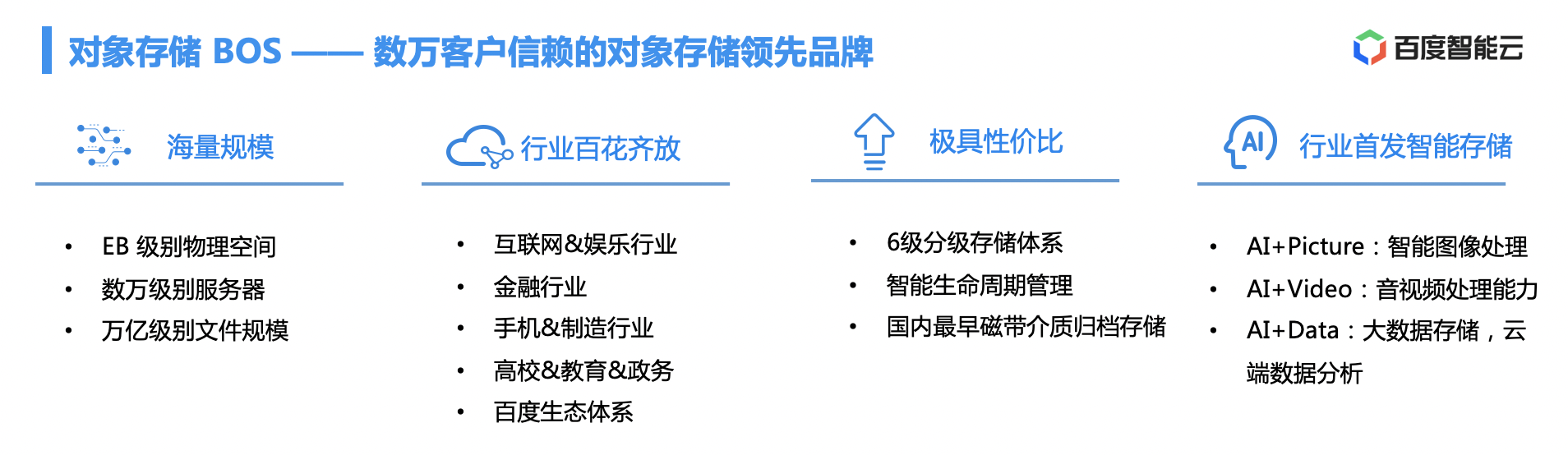
As user scenarios continue to diversify, Baidu AI Cloud Object Storage (BOS) has evolved far beyond a simple storage solution for basic read and write requirements. BOS now offers a wide range of solutions tailored to various industries, such as storage and distribution scenarios, cold data archiving solutions, disaster recovery and backup solutions, high-performance big data computing scenarios, high-performance AI computing, multimedia processing, and more.
1. Global distribution of stored data
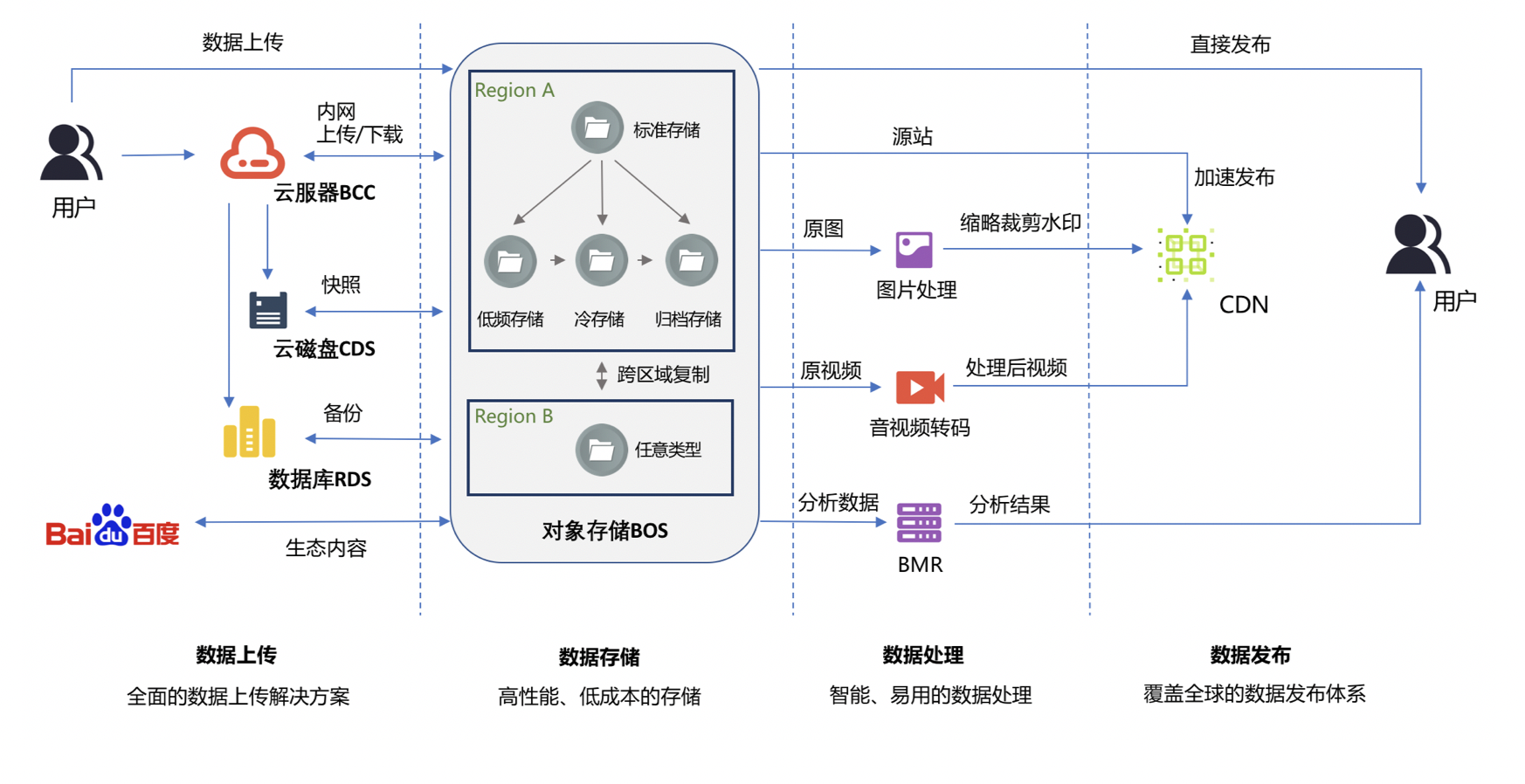
With the continuous advancements in mobile communication technology, an increasing amount of data is being generated, stored, and distributed. Previously, data distribution was primarily based on single-point scenarios, where data would flow from one data center to fixed terminal devices. However, with the advent of technologies like 4G and 5G, data distribution has transformed into a global network, sending data from multiple data centers to terminals worldwide.
In data distribution, scenarios involving hot files (e.g., popular videos, game update packages) are particularly critical. For instance, in the internet industry, on-demand streaming of movies and TV shows, emerging short videos, and the global transfer and sharing of audio files all demand a distribution system capable of low latency, high concurrency, and large-scale capacity. In these cases, you can leverage Baidu AI Cloud Object Storage (BOS) along with its content delivery network (CDN) to manage high traffic and concurrent requests. Store the data in BOS and use Baidu AI Cloud CDN's global edge nodes to deliver content to user terminals worldwide.
Recommended Configuration: Baidu AI Cloud Object Storage (BOS) + Content Delivery CDN
2. Cold data archiving storage
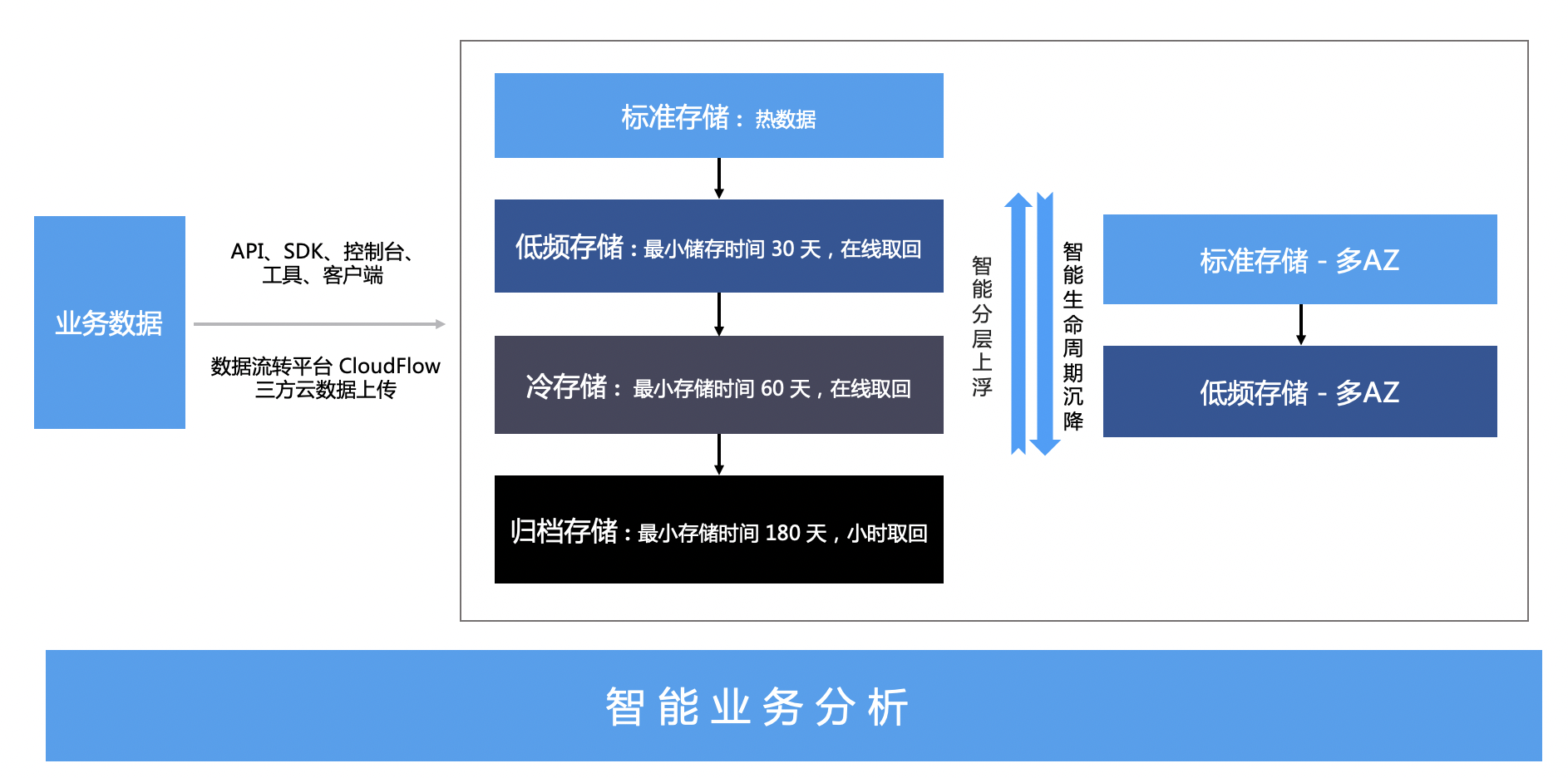
Over time, the frequency of data access naturally declines. For instance, in live broadcast scenarios, live streams are often converted into recorded videos for later viewing. These recorded videos typically experience high access demand on the day of the broadcast or shortly afterward, but interest wanes after a month, three months, six months, or even years. "Hot data" generated during the broadcast eventually transitions into "cold data.\
In such cases, national regulations often require live broadcast recordings, especially e-commerce live broadcasts, to be retained for three years. Similarly, various types of media data may need to be stored for at least 180 days. For enterprises, it is crucial to ensure the reliability of cold data storage while also reducing associated storage costs.
Object Storage (BOS) has a complete Hierarchical Storage System, with 6 storage classes: Standard Storage - Multi-AZ, Standard Storage, Infrequent Access Storage - Multi-AZ, Infrequent Access Storage, Cold Storage, and Archive Storage, meeting customers’ needs for data sedimentation from hot to cold.
Recommended Configuration: Baidu AI Cloud Object Storage (BOS) + Audio and Video Live Streaming LSS
3. Data disaster recovery and backup
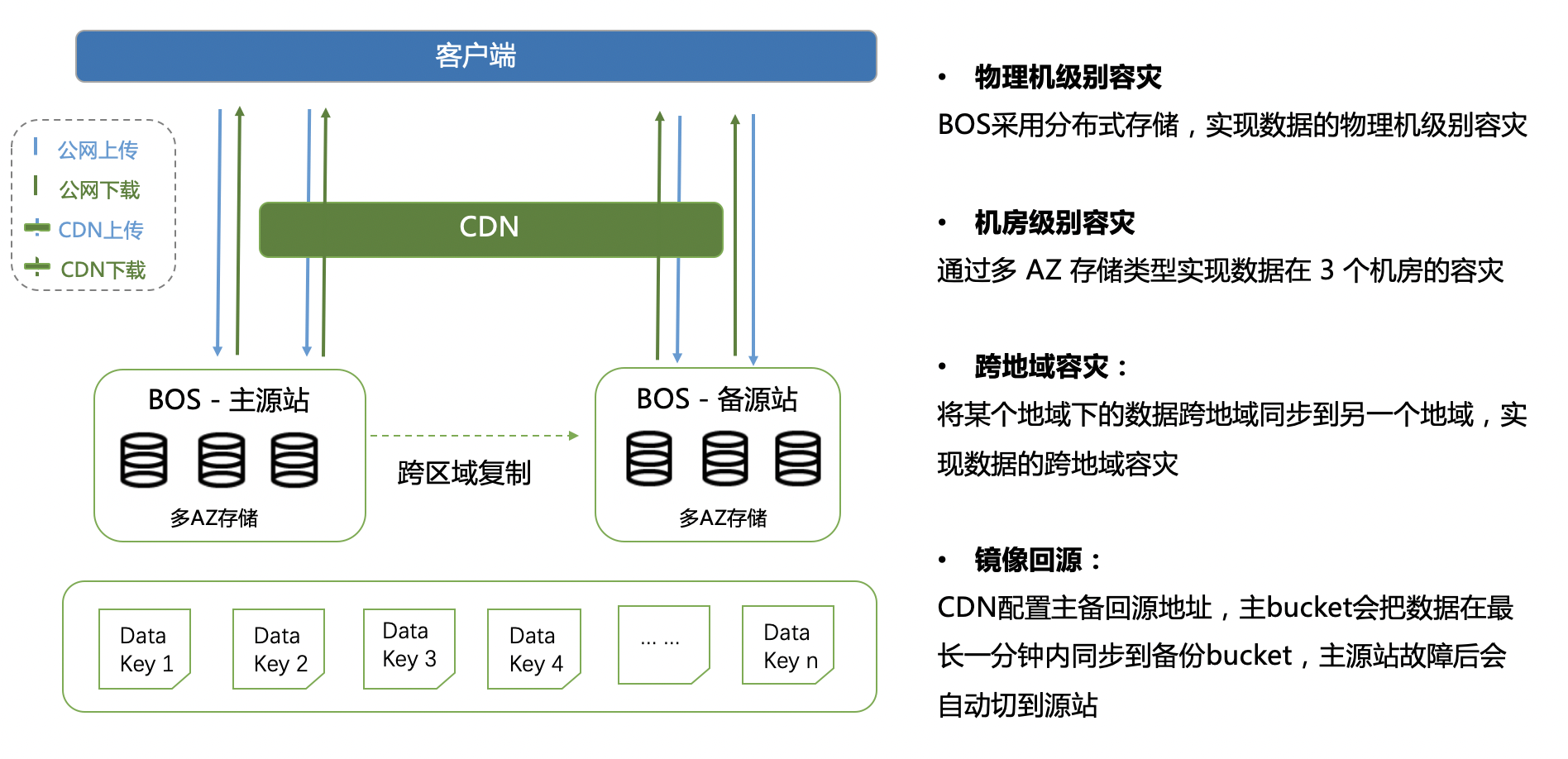
With the rise of cloud computing technology, more enterprises are migrating their data from self-managed data centers (IDCs) to the cloud, making cloud storage an essential part of their infrastructure. By utilizing BOS’s comprehensive tiered storage and disaster recovery features, businesses can implement a highly reliable cloud backup solution.
In data backup scenarios, BOS provides a tiered storage solution. Data with low access frequency that requires long-term storage can be placed in infrequent access or cold storage tiers. BOS also supports lifecycle management to help users automatically transition cold data. Furthermore, BOS provides multi-region support, enabling cross-regional backups for remote disaster recovery.
Recommended Configuration: [Infrequent Access Storage](BOS/Product Description/Tiered Storage Introduction/Why Tiered Storage Exists.md#Infrequent access storage) + [Cold Storage](BOS/Product Description/Tiered Storage Introduction/Why Tiered Storage Exists.md#Cold storage) + [Lifecycle Management](BOS/Console Operation Guide/Managing Bucket/Managing Lifecycle.md) + Cross-Region Replication
4. High-performance big data computing scenario solution
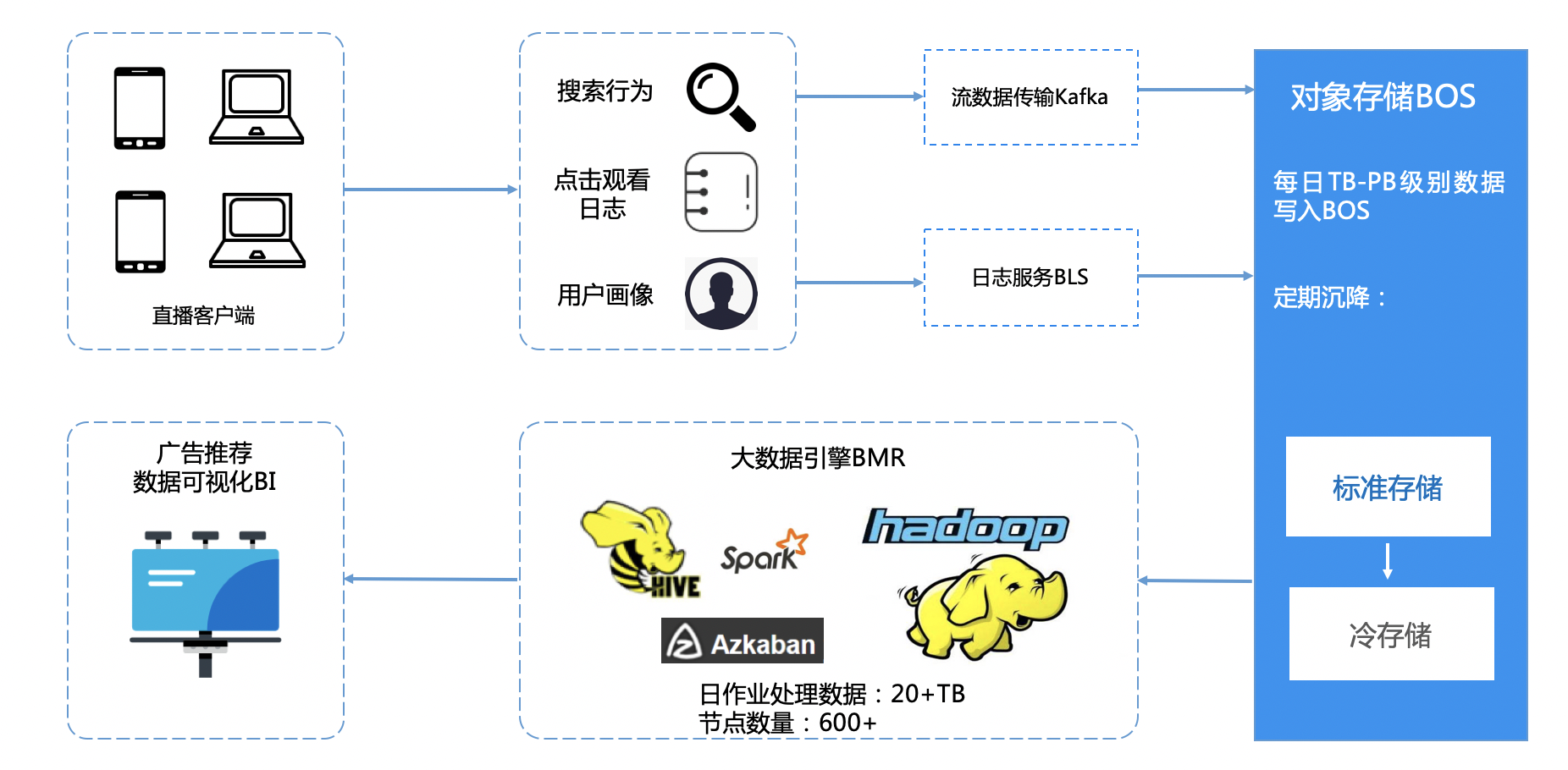
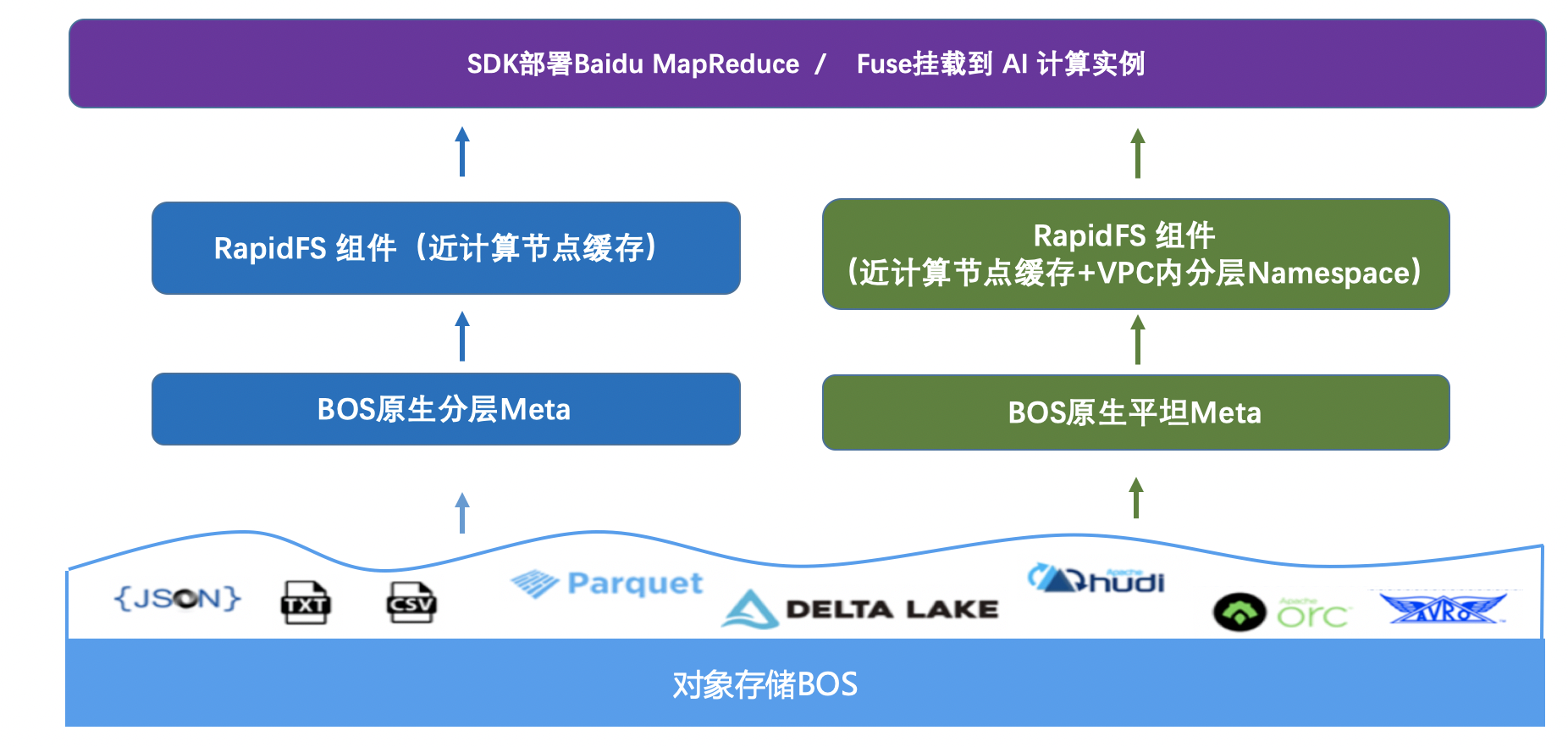
With the advent of the big data era, enterprises increasingly need to perform data analysis and computing on extensive datasets. As the premier cloud storage solution, Baidu AI Cloud Object Storage (BOS) offers a comprehensive suite of high-performance big data computing solutions. BOS can act as the foundational storage layer for MapReduce clusters, whether locally or in the cloud, fully meeting the demands of data processing, modeling, prediction, machine learning, and real-time query tasks across massive datasets.
Baidu AI Cloud Object Storage (BOS) provides native hierarchical namespace capabilities, significantly reducing latency—by approximately 70%—for large-scale batch operations like Rename, List, and Head, overcoming the latency bottlenecks of traditional object storage in big data computing scenarios.
BOS also features the RapidFS solution, enabling the caching of hot data near computing nodes to minimize latency when accessing BOS. Furthermore, RapidFS supports hierarchical namespaces within the VPCs of computing nodes. This layer of caching and hierarchical functionality reduces the latency of batch operations such as Rename, List, and Head to the microsecond level—an order of magnitude improvement—effectively breaking the latency constraints of traditional object storage in big data computing scenarios.
Recommended Configuration: Baidu AI Cloud Object Storage (BOS) + Baidu MapReduce (BMR) + Baidu OLAP Engine Palo + RapidFS
5. High-performance AI computing scenario solution
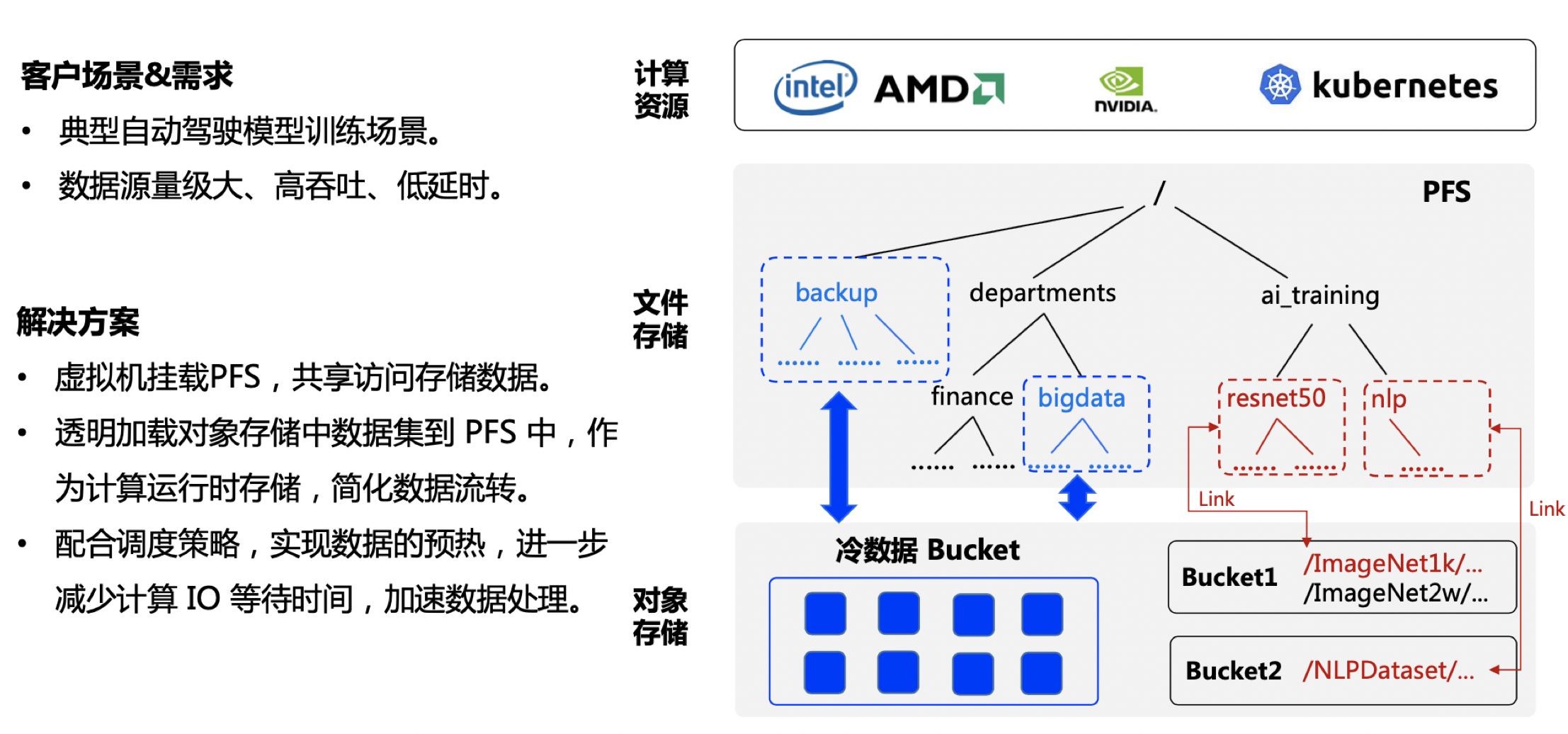
Given the current prominence of artificial intelligence, many enterprises aim to revolutionize production modes using AI, spanning industries such as autonomous driving, traditional manufacturing, and Internet-based businesses. AI computing, however, demands a vast array of foundational resources, including robust storage systems for datasets, features, and training outcomes.
When it comes to datasets, many enterprises need to support simultaneous access by numerous training models, posing significant challenges to the throughput and latency management of storage systems. Moreover, AI computing scenarios often require file-based systems, while existing object storage typically employs the S3 format, which falls short of enterprises’ needs for file API support.
To address these challenges, Baidu AI Cloud Object Storage (BOS) has introduced a tailored solution for AI applications. Using products like RapidFS and the parallel file system (PFS), businesses can seamlessly integrate BOS with GPU computing nodes for high-speed data transfers. This approach maintains the existing usage patterns while offering features like high performance, low latency, large throughput, and ease of use.
Recommended Configuration: Baidu AI Cloud Object Storage (BOS) + RapidFS + Parallel File System PFS + Baidu Cloud Compute (BCC)-GPU
6. Multimedia data processing
BOS supports a variety of data processing functions. Users can perform tasks such as cropping, rotating, watermarking, scaling, and enhancing image quality for files uploaded to BOS. It also facilitates transcoding and rendering of audio, video, and document content. Additionally, utilizing event notification mechanisms and cloud function compute (CFC) enables flexible, customized event handling.
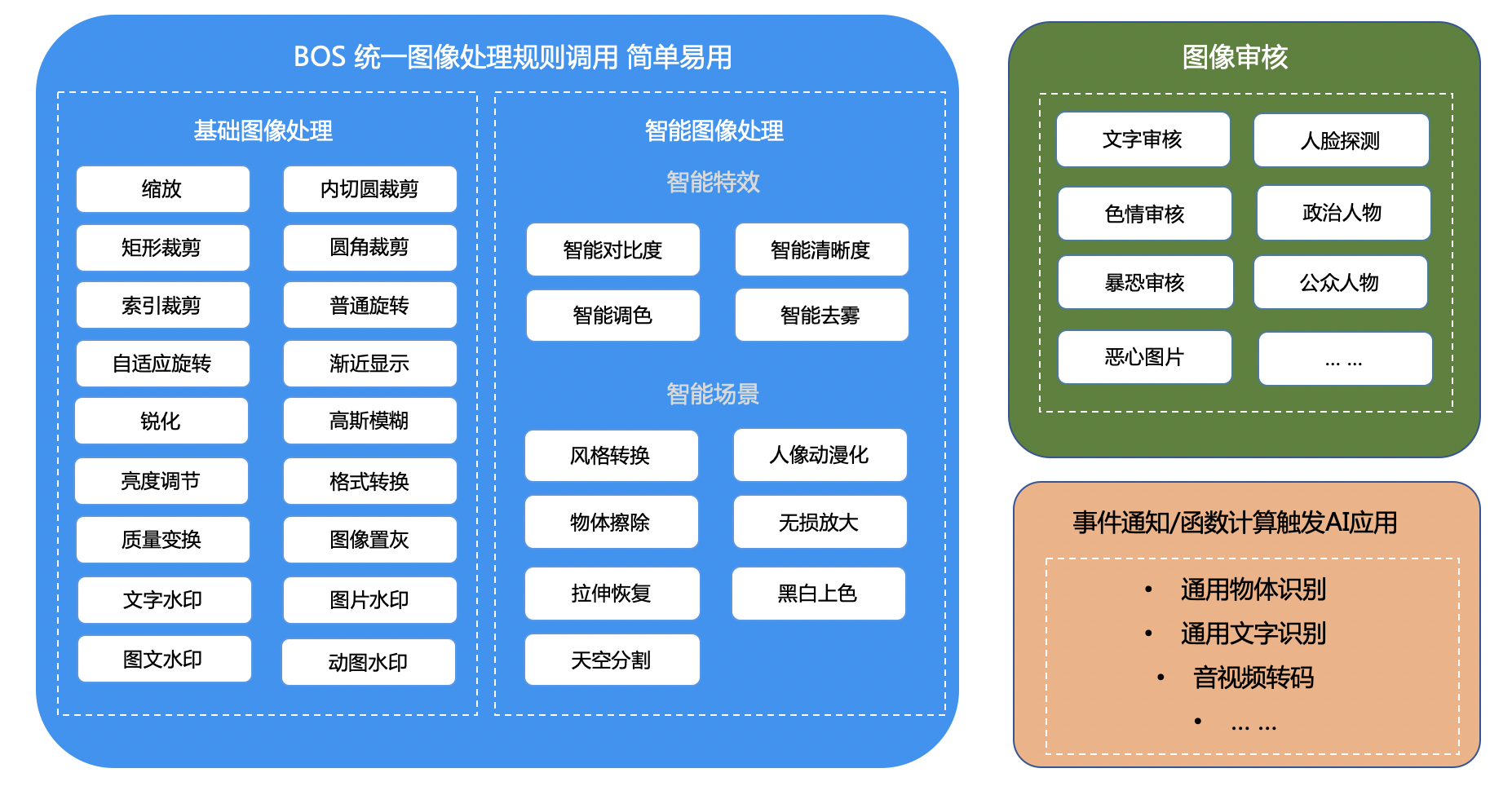
In addition to general use cases, BOS delivers advanced AI-based image processing services, including intelligent scene recognition and special effects, offering comprehensive image enhancement solutions for operational activities, social media, e-commerce, posters, and similar scenarios.

For video content, users can leverage Baidu AI Cloud’s VideoWorks platform for editing audio and video files. Through customizable workflows, tasks like generating video thumbnails and transcoding can be executed with just one click.
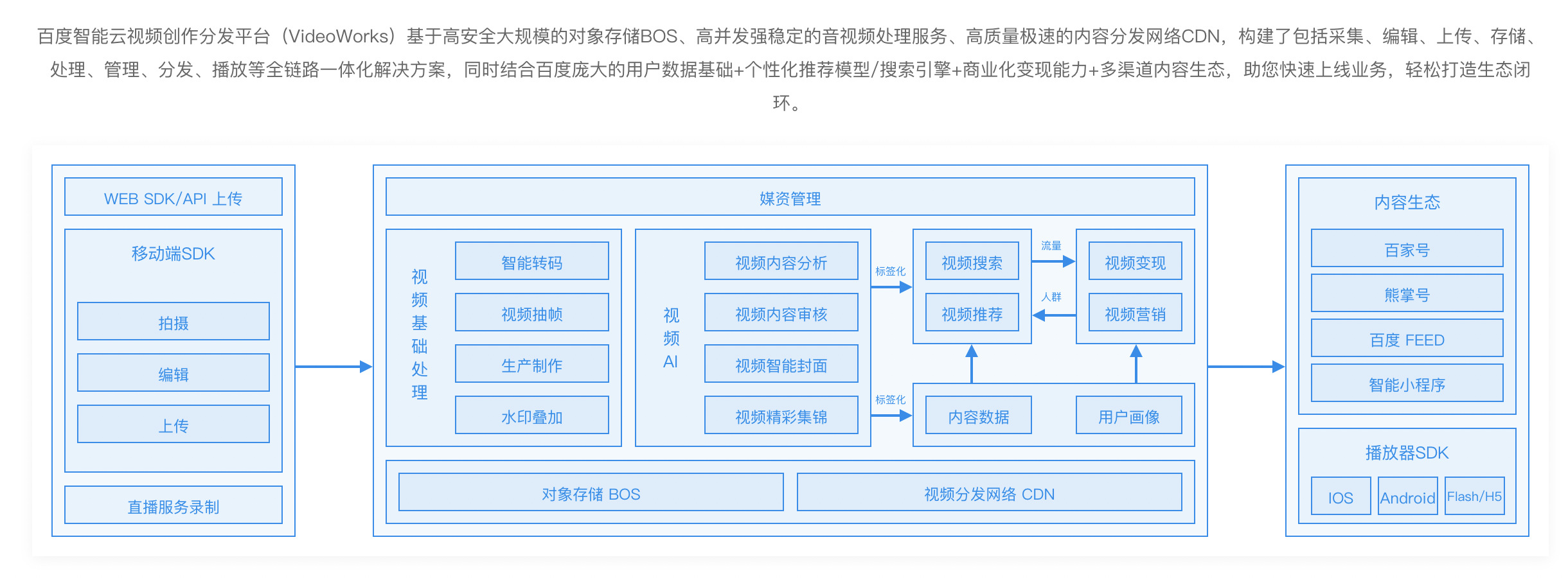
Recommended Configuration: Baidu AI Cloud Object Storage (BOS) + Multimedia Cloud Processing (MCP) + Document Service DOC + Video Creation and Distribution Platform VideoWorks.