Instance Group

BCM

  • Function Release Records
  • Product Announcement
    • Site Monitor Billing Announcement
  • Product Description
    • Product Introduction
    • Core concepts
    • Product advantages
    • Product features
  • Product pricing
    • Product pricing
    • Site Monitor Pricing
  • Quick Start
  • Operation guide
    • Enter Cloud Monitor
    • Dashboard
      • Overview
      • Management Dashboard Charts
      • Management Dashboard
    • Alarm Service
      • Overview
      • Alarm strategy
      • Alarm history
      • Alarm Template
      • Alarm Notification Template
      • Alarm callback
    • Cloud product monitor
      • Instance monitor
      • Instance Group
      • View Metrics
    • Site Monitor
      • Timed Detection (Formerly Site Monitor)
        • Overview
        • Manage Timed Probe Tasks
        • Purchase Guide
        • View timed probe tasks
      • IP advanced fault diagnosis
        • Manage IP Advanced Fault Diagnosis Tasks
        • View IP Advanced Fault Diagnosis Tasks
      • Instant probe
        • Overview
        • Manage instant probe tasks
    • Event Monitor
    • Event Bus
      • Event Delivery History
      • Overview
      • Event summary
      • Event Set
      • Event Rules
        • Event Rules
        • Event content conversion
        • Event pattern
  • API Reference
    • Overview
    • Service domain
    • Error response
    • Query Monitoring Data for Partial Dimensions
    • Dashboard API
    • Common Request and Response Headers
    • Alarm Management API
    • Alarm Management Interface V2
    • Alarm history
    • Push Data API
    • Event Bus Push
    • Application Monitor
    • Dimension Value TopN and Monitoring Data Query Interface
    • Batch Query Monitoring Data Interface V2
    • Dimension Value TopN Query Interface
    • Instance Group Interface
    • Site Monitor
    • Query Latest Metric Data for Partial Dimensions
    • General Description
    • Query Data API
    • Event Monitor
    • Instant Probe
    • Event Alarm History
    • Notification Template
  • Java-SDK
    • Overview
    • Initialization
    • Install the SDK Package
    • BcmClient
    • Query Monitoring Data for Partial Dimensions
    • Dimension Value TopN and Monitoring Data Query Interface
    • Batch Query Monitoring Data Interface V2
    • Dimension Value TopN Query Interface
    • Query Latest Metric Data for Partial Dimensions
    • Query Data API
    • Alarm Strategy-related APIs
    • Batch Query Data Interface
    • Alarm History-related APIs
  • Python-SDK
    • Overview
    • Initialization
    • Install SDK
    • BcmClient
    • Query Monitoring Data for Partial Dimensions
    • Batch Query Monitoring Data Interface V2
    • Dimension Value TopN Query Interface
    • Query Latest Metric Data for Partial Dimensions
    • Query Data API
    • Alarm Strategy List API
    • Batch Data Query Interface
  • Go-SDK
    • Overview
    • Initialization
    • Install the SDK Package
    • BcmClient
    • Query Monitoring Data for Partial Dimensions
    • Dimension Value TopN and Monitoring Data Query Interface
    • Batch Query Monitoring Data Interface V2
    • Dimension Value TopN Query Interface
    • Query Latest Metric Data for Partial Dimensions
    • Query Data API
    • Alarm Strategy-related APIs
    • Alarm History-related APIs
    • Batch Data Query Interface
  • BCM-Agent
    • Functions
    • Monitoring Trend Chart
    • BCM-Agent-Frequently Asked Questions
    • Appendix
  • FAQs
    • Common Questions Overview
    • Fault-related questions
    • Configuration-related questions
    • Performance-related questions
  • Cloud Product Monitor List
    • Cloud Product Metric List (Legacy Version Hidden)
    • Cloud Product Monitor Object Type List
    • Cloud Product Event List
    • Cloud Product Metric List
      • Database
        • Cloud Database TableStorage
        • Cloud Database DocDB for MongoDB
        • Data transmission service (DTS)
        • Cloud native database GaiaDB
        • Vector Database (VectorDB)
        • Dedicated Database Cluster (DDC)
        • Cloud Database Redis
        • Cloud database RDS
        • Cloud Database HBase
      • Enterprise Application
        • Message Service for RabbitMQ
      • Network
        • Service Network Interface Card (SNIC)
        • Peering Connections
        • IPv6 gateway
        • NAT Gateway
        • Load Balancer Dedicated Cluster LBDC
        • Baidu Load Balance (BLB)
        • Network probe NP
        • Dedicated channel
        • Elastic IP EIP
        • Elastic Network Interface Card (ENIC)
        • Cloud Smart Network (CSN)
        • Dedicated gateway
        • Virtual Private Network (VPN) Gateway
        • Layer 2 Gateway LTGW
        • Physical dedicated line
      • Intelligent Big Data
        • MapReduce BMR
        • Message service for Kafka-dedicated
        • Message Service for RocketMQ
        • Baidu Stream Computing (BSC)
        • Baidu Elasticsearch
        • Log Service BLS
        • Data warehouse DORIS
      • Cloud native
        • Cloud Function Computing
        • Baidu container instance (BCI)
      • Compute
        • Baidu Cloud Compute (BCC)
        • Elastic Baremetal Compute BBC
      • Storage and CDN
        • Parallel Filesystem Service (PFS)
        • Cloud File System (CFS)
        • Content delivery network (CDN)
        • Baidu object storage (BOS)
        • Cloud Disk Server (CDS)
        • Baidu edge computing (BEC)
      • Website service
        • Baidu Cloud Virtual Host (BCH)
      • Large Model Platform
        • Qianfan Large Model Platform ModelBuilder
  • Typical Practices
    • Scenarios for Batch Creation of Alarm Strategies
    • Usage Scenarios for Different Notification Channels
  • Service Level Agreement (SLA)
    • Site Monitor Service Level Agreement SLA
  • BCM-Tool
    • Uninstallation Method
    • Installation method
    • BCM-Tool-Frequently Asked Questions
    • Functions
    • Multi-Region Service
    • Application method
All documents
menu
No results found, please re-enter

BCM

  • Function Release Records
  • Product Announcement
    • Site Monitor Billing Announcement
  • Product Description
    • Product Introduction
    • Core concepts
    • Product advantages
    • Product features
  • Product pricing
    • Product pricing
    • Site Monitor Pricing
  • Quick Start
  • Operation guide
    • Enter Cloud Monitor
    • Dashboard
      • Overview
      • Management Dashboard Charts
      • Management Dashboard
    • Alarm Service
      • Overview
      • Alarm strategy
      • Alarm history
      • Alarm Template
      • Alarm Notification Template
      • Alarm callback
    • Cloud product monitor
      • Instance monitor
      • Instance Group
      • View Metrics
    • Site Monitor
      • Timed Detection (Formerly Site Monitor)
        • Overview
        • Manage Timed Probe Tasks
        • Purchase Guide
        • View timed probe tasks
      • IP advanced fault diagnosis
        • Manage IP Advanced Fault Diagnosis Tasks
        • View IP Advanced Fault Diagnosis Tasks
      • Instant probe
        • Overview
        • Manage instant probe tasks
    • Event Monitor
    • Event Bus
      • Event Delivery History
      • Overview
      • Event summary
      • Event Set
      • Event Rules
        • Event Rules
        • Event content conversion
        • Event pattern
  • API Reference
    • Overview
    • Service domain
    • Error response
    • Query Monitoring Data for Partial Dimensions
    • Dashboard API
    • Common Request and Response Headers
    • Alarm Management API
    • Alarm Management Interface V2
    • Alarm history
    • Push Data API
    • Event Bus Push
    • Application Monitor
    • Dimension Value TopN and Monitoring Data Query Interface
    • Batch Query Monitoring Data Interface V2
    • Dimension Value TopN Query Interface
    • Instance Group Interface
    • Site Monitor
    • Query Latest Metric Data for Partial Dimensions
    • General Description
    • Query Data API
    • Event Monitor
    • Instant Probe
    • Event Alarm History
    • Notification Template
  • Java-SDK
    • Overview
    • Initialization
    • Install the SDK Package
    • BcmClient
    • Query Monitoring Data for Partial Dimensions
    • Dimension Value TopN and Monitoring Data Query Interface
    • Batch Query Monitoring Data Interface V2
    • Dimension Value TopN Query Interface
    • Query Latest Metric Data for Partial Dimensions
    • Query Data API
    • Alarm Strategy-related APIs
    • Batch Query Data Interface
    • Alarm History-related APIs
  • Python-SDK
    • Overview
    • Initialization
    • Install SDK
    • BcmClient
    • Query Monitoring Data for Partial Dimensions
    • Batch Query Monitoring Data Interface V2
    • Dimension Value TopN Query Interface
    • Query Latest Metric Data for Partial Dimensions
    • Query Data API
    • Alarm Strategy List API
    • Batch Data Query Interface
  • Go-SDK
    • Overview
    • Initialization
    • Install the SDK Package
    • BcmClient
    • Query Monitoring Data for Partial Dimensions
    • Dimension Value TopN and Monitoring Data Query Interface
    • Batch Query Monitoring Data Interface V2
    • Dimension Value TopN Query Interface
    • Query Latest Metric Data for Partial Dimensions
    • Query Data API
    • Alarm Strategy-related APIs
    • Alarm History-related APIs
    • Batch Data Query Interface
  • BCM-Agent
    • Functions
    • Monitoring Trend Chart
    • BCM-Agent-Frequently Asked Questions
    • Appendix
  • FAQs
    • Common Questions Overview
    • Fault-related questions
    • Configuration-related questions
    • Performance-related questions
  • Cloud Product Monitor List
    • Cloud Product Metric List (Legacy Version Hidden)
    • Cloud Product Monitor Object Type List
    • Cloud Product Event List
    • Cloud Product Metric List
      • Database
        • Cloud Database TableStorage
        • Cloud Database DocDB for MongoDB
        • Data transmission service (DTS)
        • Cloud native database GaiaDB
        • Vector Database (VectorDB)
        • Dedicated Database Cluster (DDC)
        • Cloud Database Redis
        • Cloud database RDS
        • Cloud Database HBase
      • Enterprise Application
        • Message Service for RabbitMQ
      • Network
        • Service Network Interface Card (SNIC)
        • Peering Connections
        • IPv6 gateway
        • NAT Gateway
        • Load Balancer Dedicated Cluster LBDC
        • Baidu Load Balance (BLB)
        • Network probe NP
        • Dedicated channel
        • Elastic IP EIP
        • Elastic Network Interface Card (ENIC)
        • Cloud Smart Network (CSN)
        • Dedicated gateway
        • Virtual Private Network (VPN) Gateway
        • Layer 2 Gateway LTGW
        • Physical dedicated line
      • Intelligent Big Data
        • MapReduce BMR
        • Message service for Kafka-dedicated
        • Message Service for RocketMQ
        • Baidu Stream Computing (BSC)
        • Baidu Elasticsearch
        • Log Service BLS
        • Data warehouse DORIS
      • Cloud native
        • Cloud Function Computing
        • Baidu container instance (BCI)
      • Compute
        • Baidu Cloud Compute (BCC)
        • Elastic Baremetal Compute BBC
      • Storage and CDN
        • Parallel Filesystem Service (PFS)
        • Cloud File System (CFS)
        • Content delivery network (CDN)
        • Baidu object storage (BOS)
        • Cloud Disk Server (CDS)
        • Baidu edge computing (BEC)
      • Website service
        • Baidu Cloud Virtual Host (BCH)
      • Large Model Platform
        • Qianfan Large Model Platform ModelBuilder
  • Typical Practices
    • Scenarios for Batch Creation of Alarm Strategies
    • Usage Scenarios for Different Notification Channels
  • Service Level Agreement (SLA)
    • Site Monitor Service Level Agreement SLA
  • BCM-Tool
    • Uninstallation Method
    • Installation method
    • BCM-Tool-Frequently Asked Questions
    • Functions
    • Multi-Region Service
    • Application method
  • Document center
  • arrow
  • BCM
  • arrow
  • Operation guide
  • arrow
  • Cloud product monitor
  • arrow
  • Instance Group
Table of contents on this page
  • Function overview
  • Create instance group
  • View instance group
  • Add/remove instance
  • Modify instance group name
  • Delete instance group
  • Add instance group alarm strategy
  • Edit/delete instance group alarm strategy

Instance Group

Updated at:2025-11-03

Function overview

Support is provided for binding multiple instances under the same cloud product to a single instance group, enabling the configuration of group-based alarm strategies and significantly improving alarm setup efficiency for numerous cloud product instances.

Create instance group

  1. Log in to Baidu AI Cloud, select Baidu Cloud Monitor (BCM), and click "Cloud Product Monitor" followed by "Instance Group" in the left navigation bar to access the Instance Group List page.
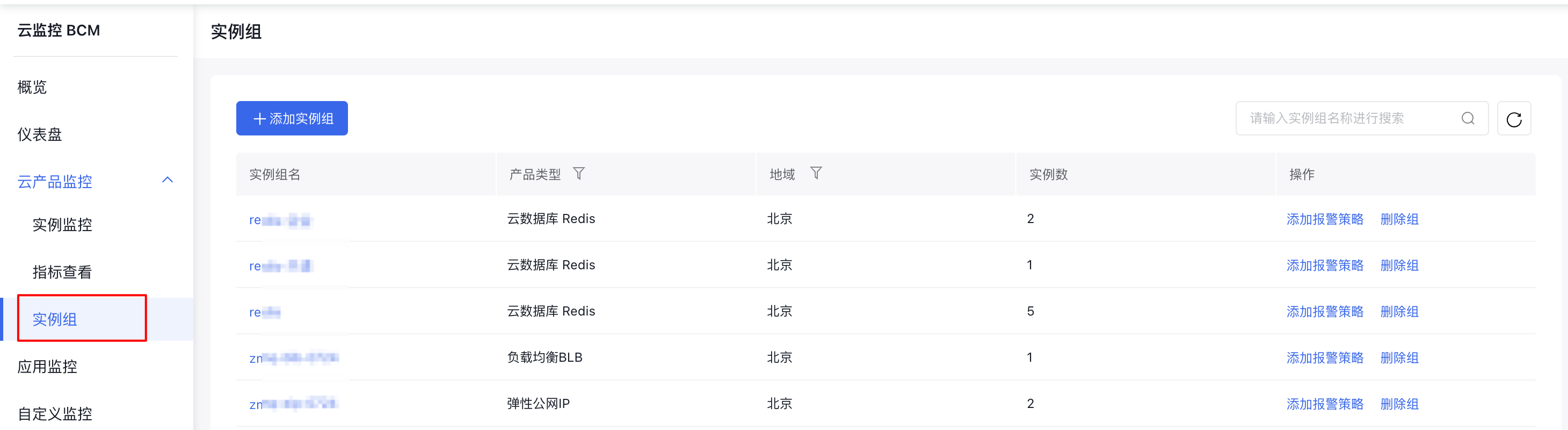
image.png

  1. Click the "Create Instance Group" button to access the Instance Group creation page.
  2. Enter the instance group name, select the instance type and region, choose the instances, and click the "Save" button to complete instance group creation.
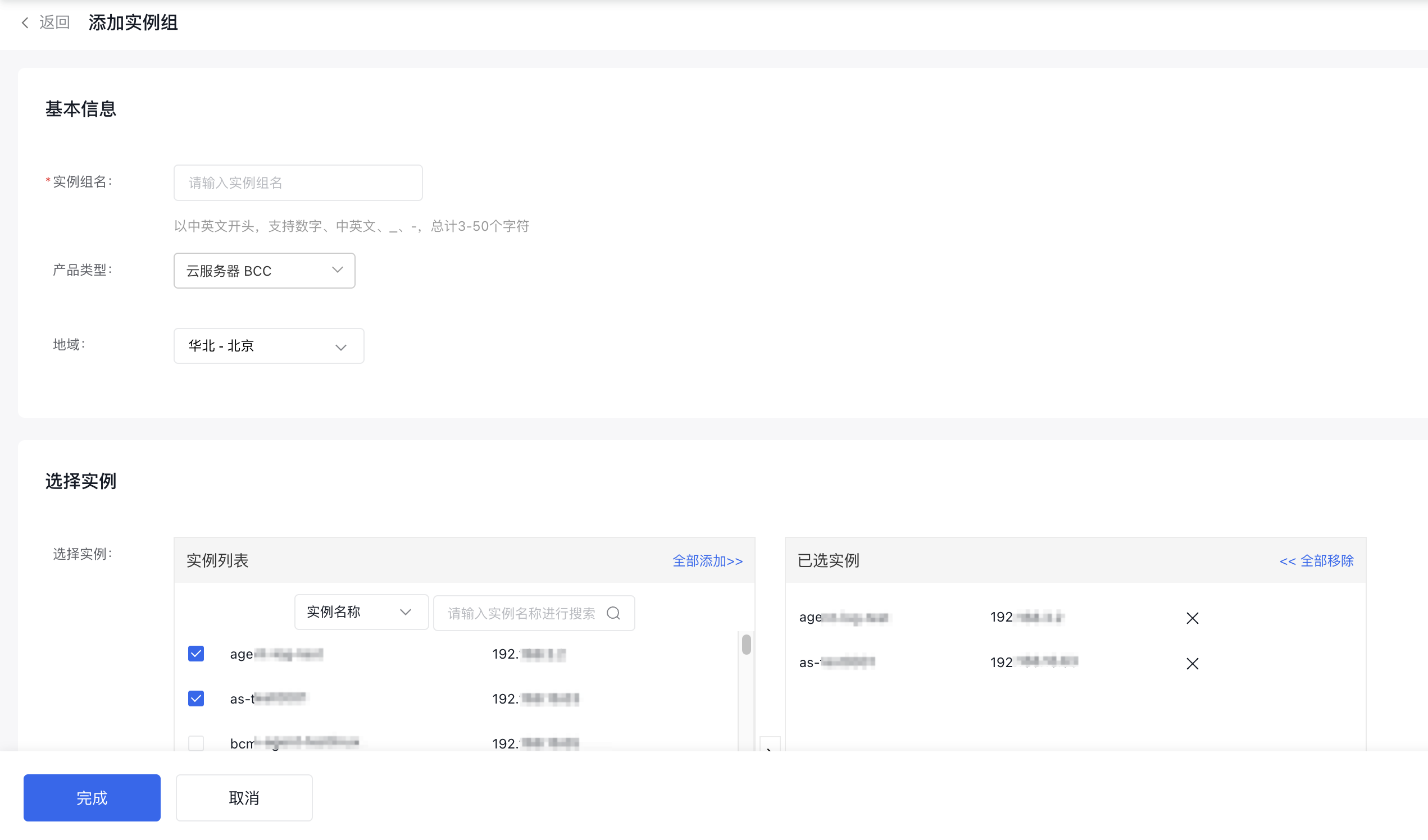
image.png

Note:
An instance can only belong to one instance group. When an instance is repeatedly added to different instance groups, it will belong to the most recently added instance group, and other instance groups will automatically remove this instance.

View instance group

  1. Log in to Baidu AI Cloud, select Baidu Cloud Monitor (BCM), and click "Instance Group" in the left navigation bar to open the Instance Group List page.
  2. Select the desired instance group, click to enter its details page, and view the instance information and alarm strategies associated with that group.
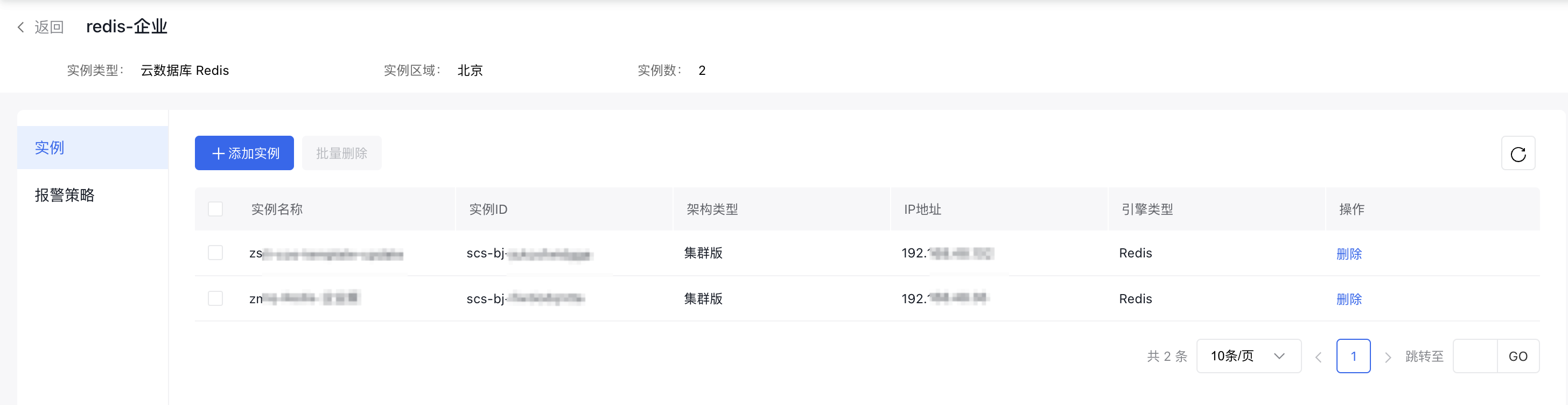
image.png

Add/remove instance

  1. Click the name of the instance group where you want to add or remove instances, and its details page will open.
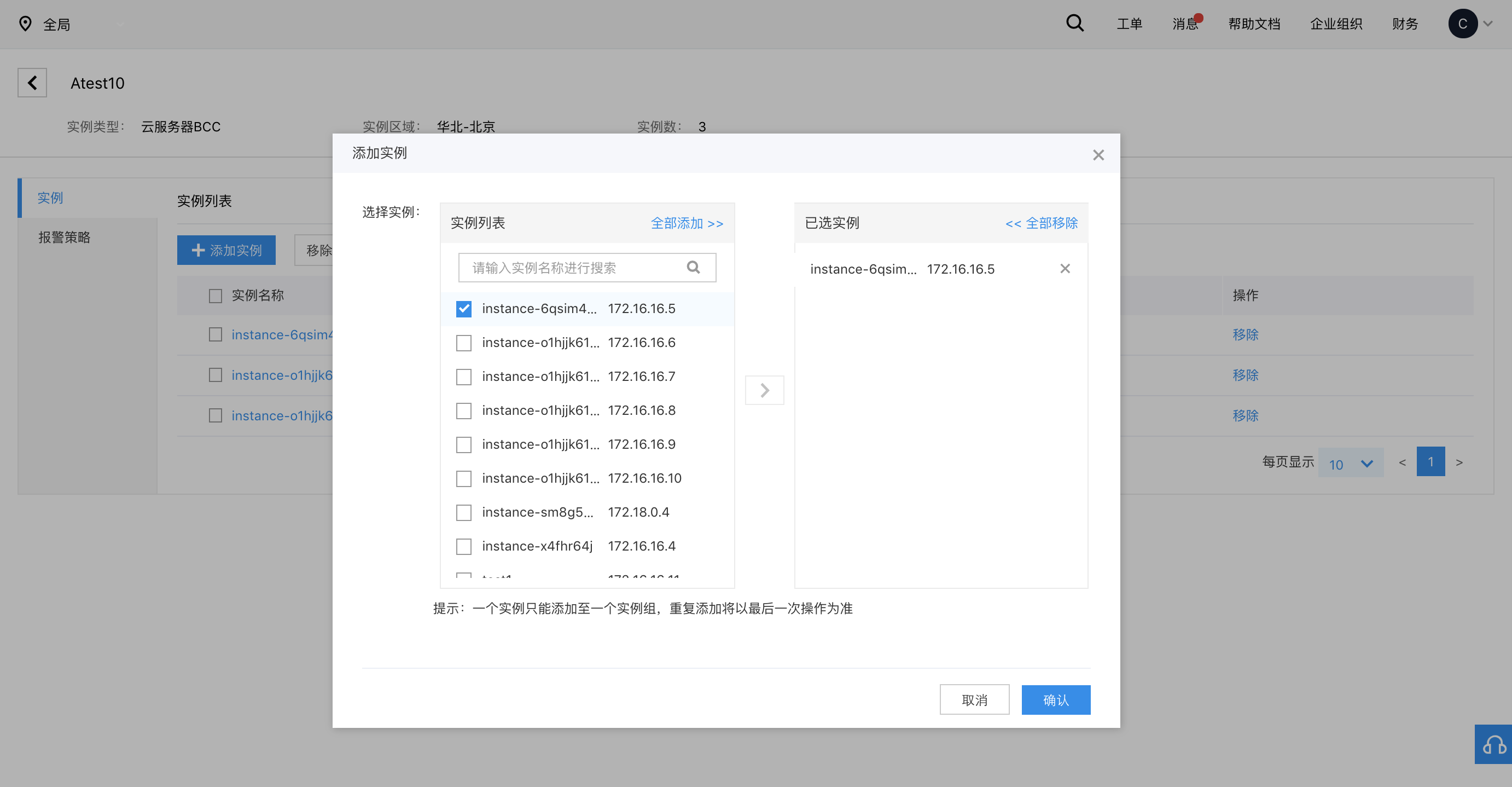
  2. Add instance: Click Add Instance, check the instances to be added in the pop-up window, then click OK to complete instance addition.
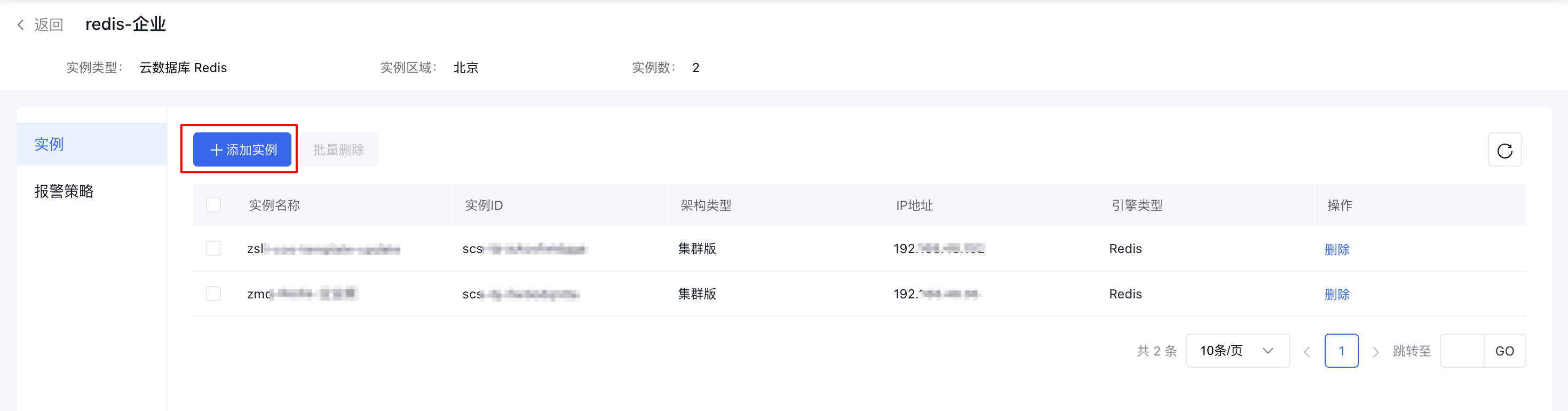
    image.png
    image.png
  3. Remove instance:
    Method 1: Select an instance and click Remove button to remove it from the instance group. Multiple selections are supported.
    Method 2: Click Remove button on the far right of the instance list to remove the instance from the instance group.
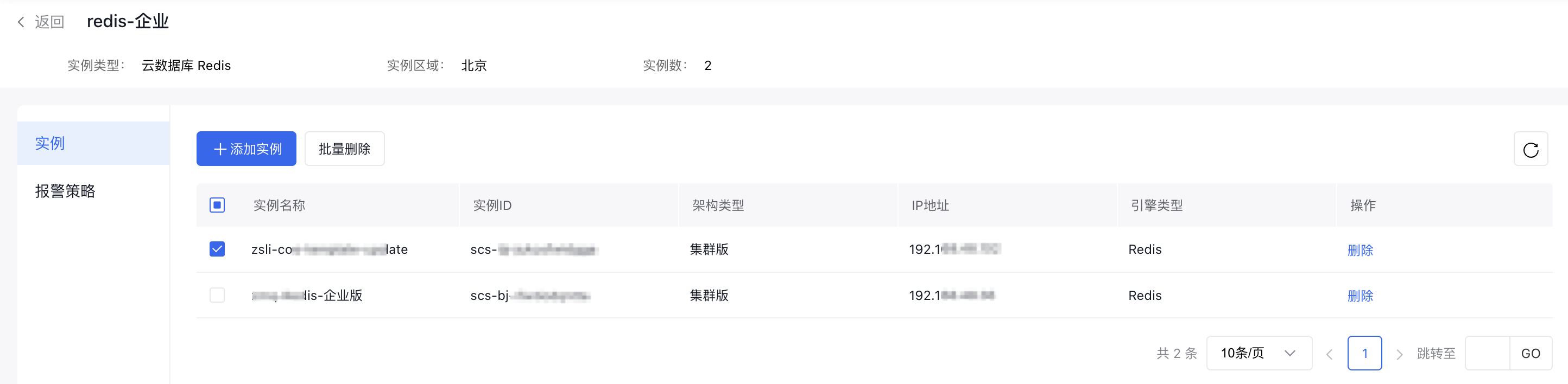
    image.png

Note:

  • Instances added to an instance group will automatically adopt the alarm strategies assigned to that group.
  • When an instance is removed from an instance group, it will no longer inherit the alarm strategies associated with that group.

Modify instance group name

  1. Navigate to the Instance Group List page, hover over the instance group name to be modified, and click Edit button next to the instance name.
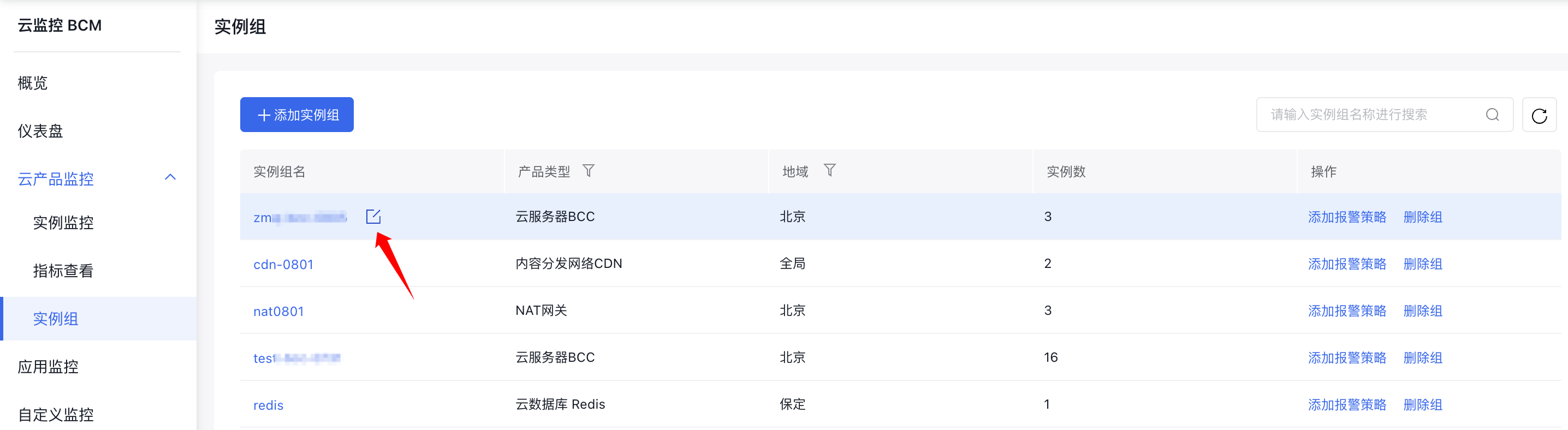
    image.png
  2. In the pop-up window, modify the instance group name, click OK to complete instance group name modification.
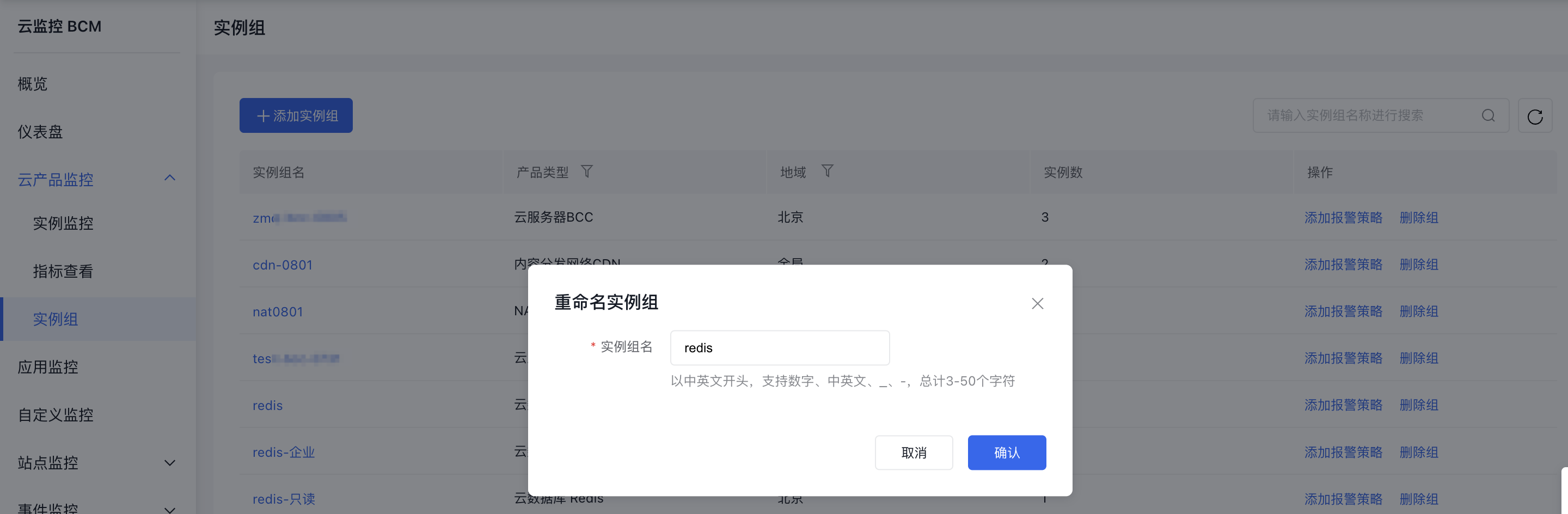
    image.png

Delete instance group

  1. Navigate to the Instance Group List page, and click Delete Group on the far right of the list.
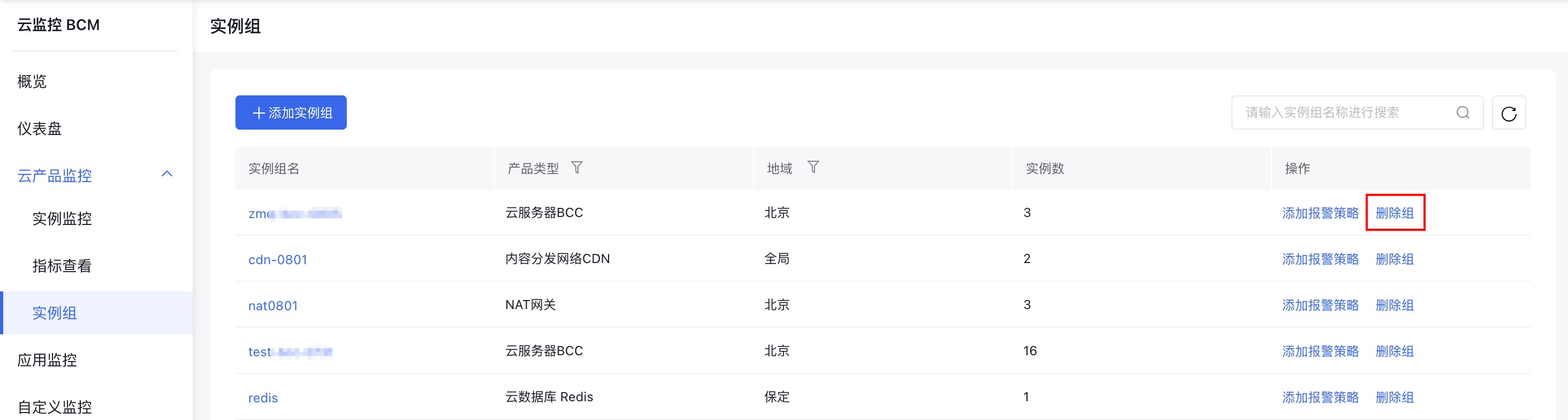
    image.png
  2. Click OK in the pop-up window to delete the instance group.
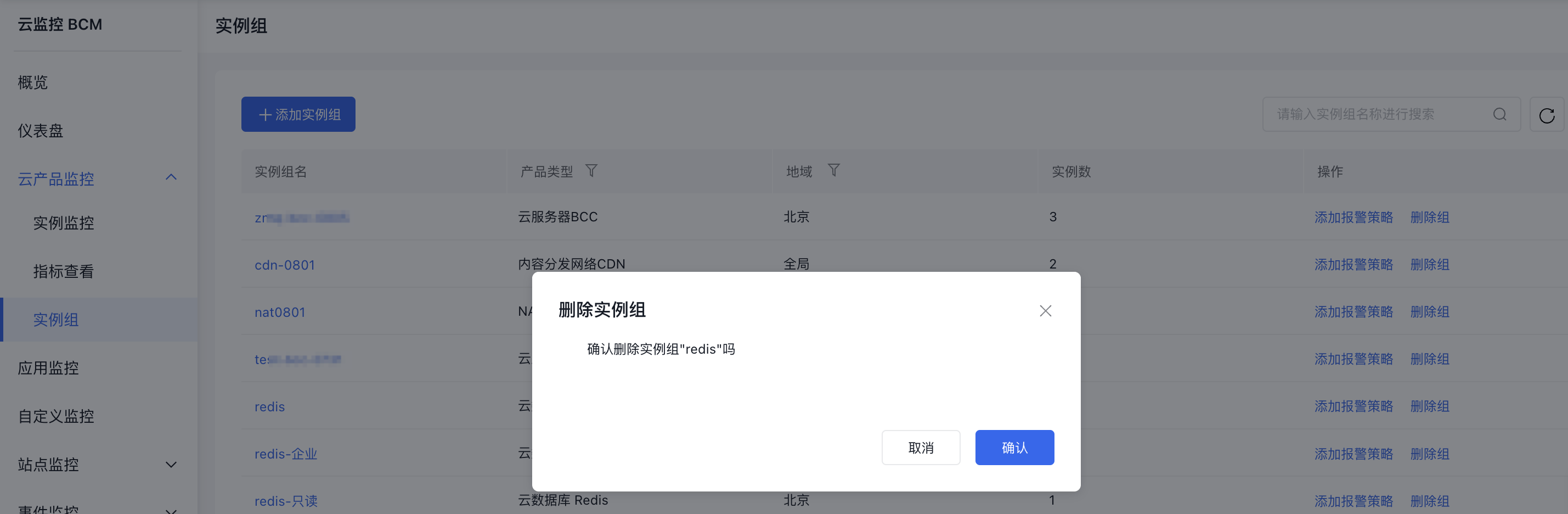
    image.png

Add instance group alarm strategy

There are two methods to add alarm strategies:
Method 1:

  1. Log in to Baidu AI Cloud, select Baidu Cloud Monitor (BCM), and click "Cloud Product Monitor" followed by "Instance Group" in the left navigation bar to access the Instance Group List page.
  2. Click "Add Alarm Strategy" on the far right of the list to go to the Create Alarm Strategy page.
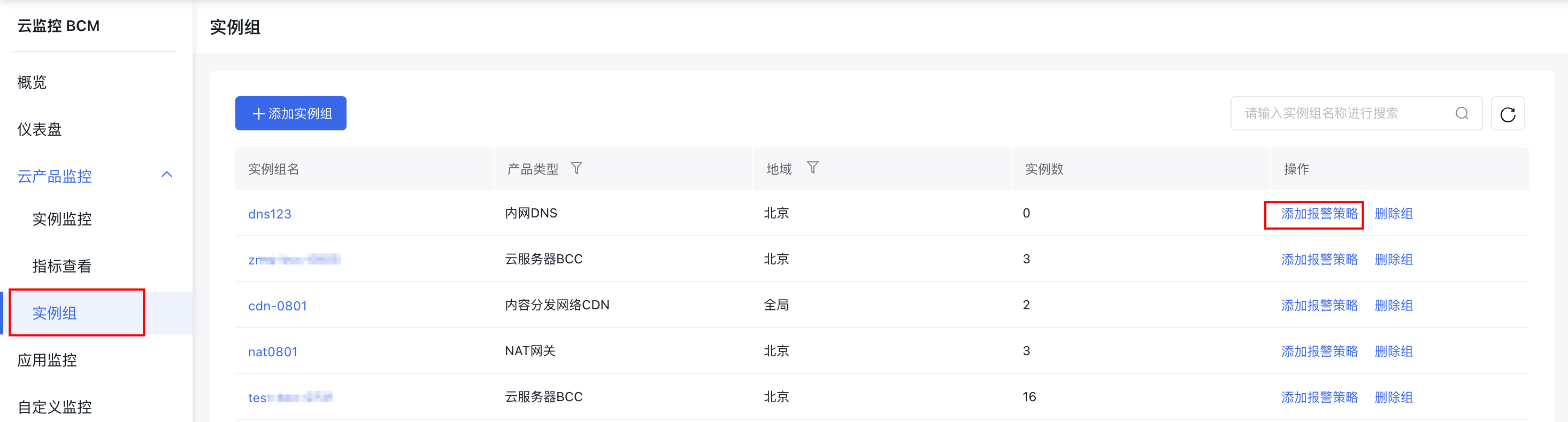
image.png

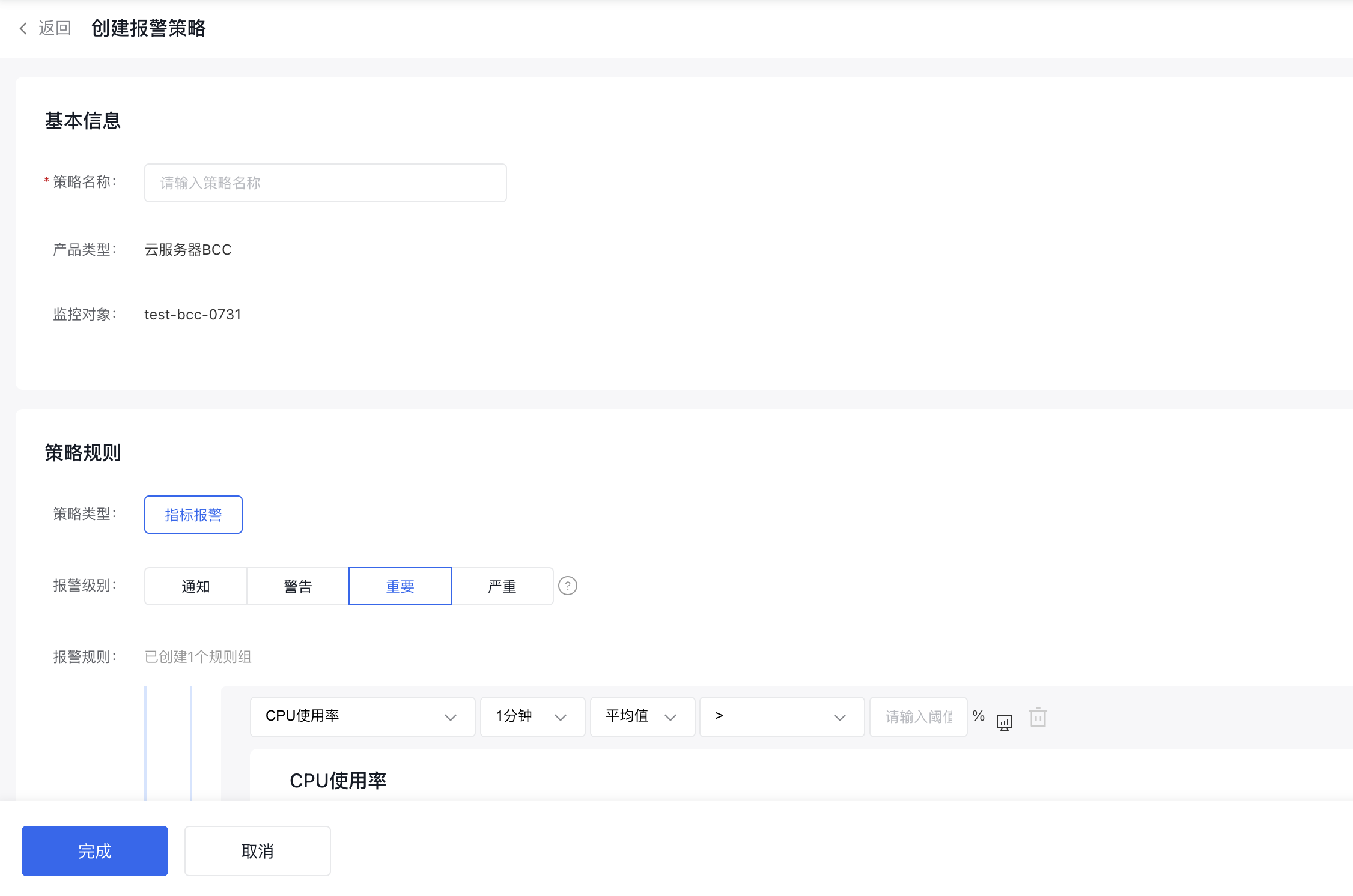
  1. Fill out the form and click the "Save" button to finalize the alarm strategy creation.
​

Method 2:

  1. Log in to Baidu AI Cloud, select "Baidu Cloud Monitor (BCM)," click "Alarm Management" and then "Alarm Strategy" in the left navigation bar to access the Alarm Strategy List page.
  2. Click the "Add Strategy" button to go to the Create Alarm Strategy page.
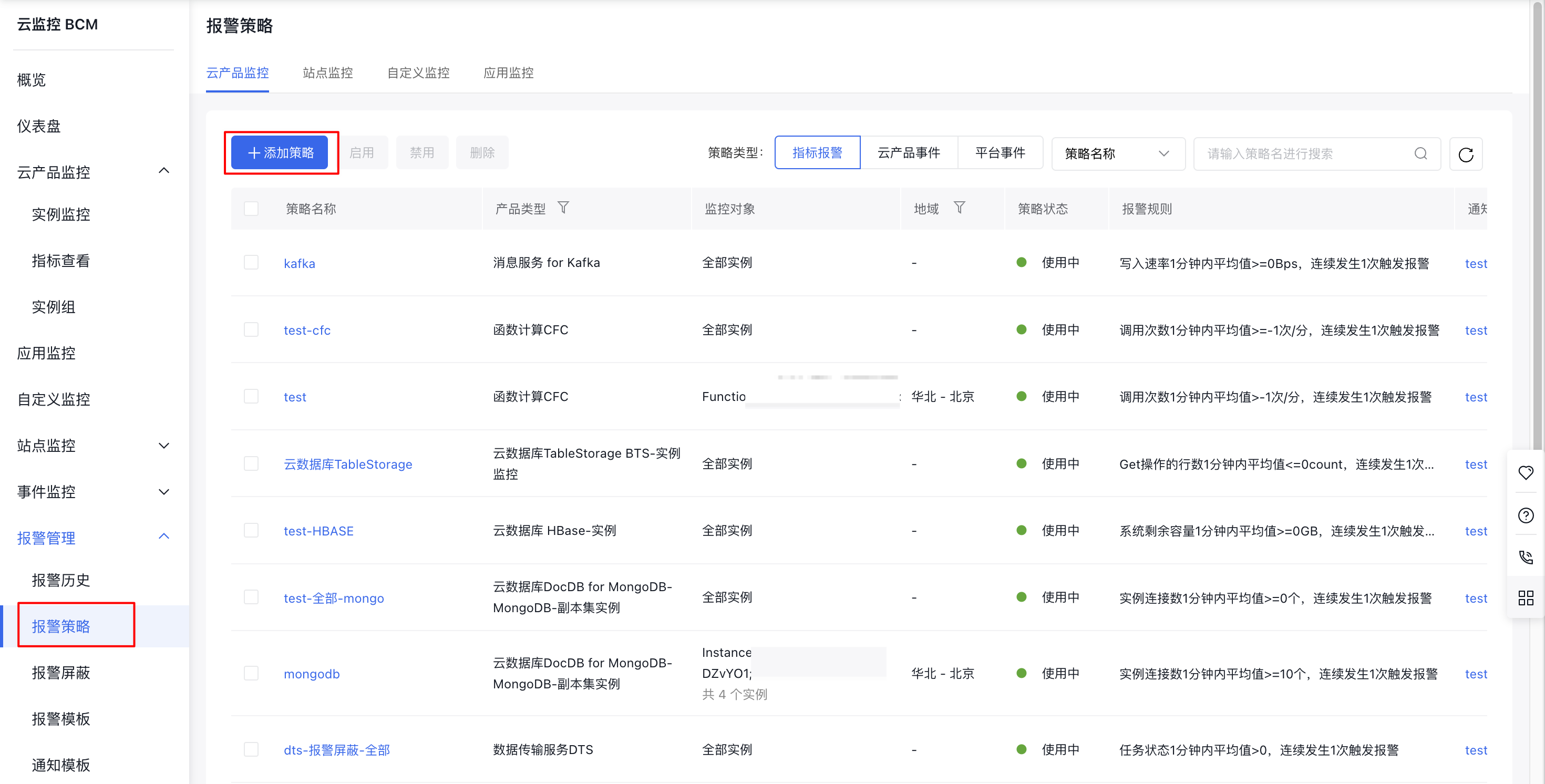
image.png

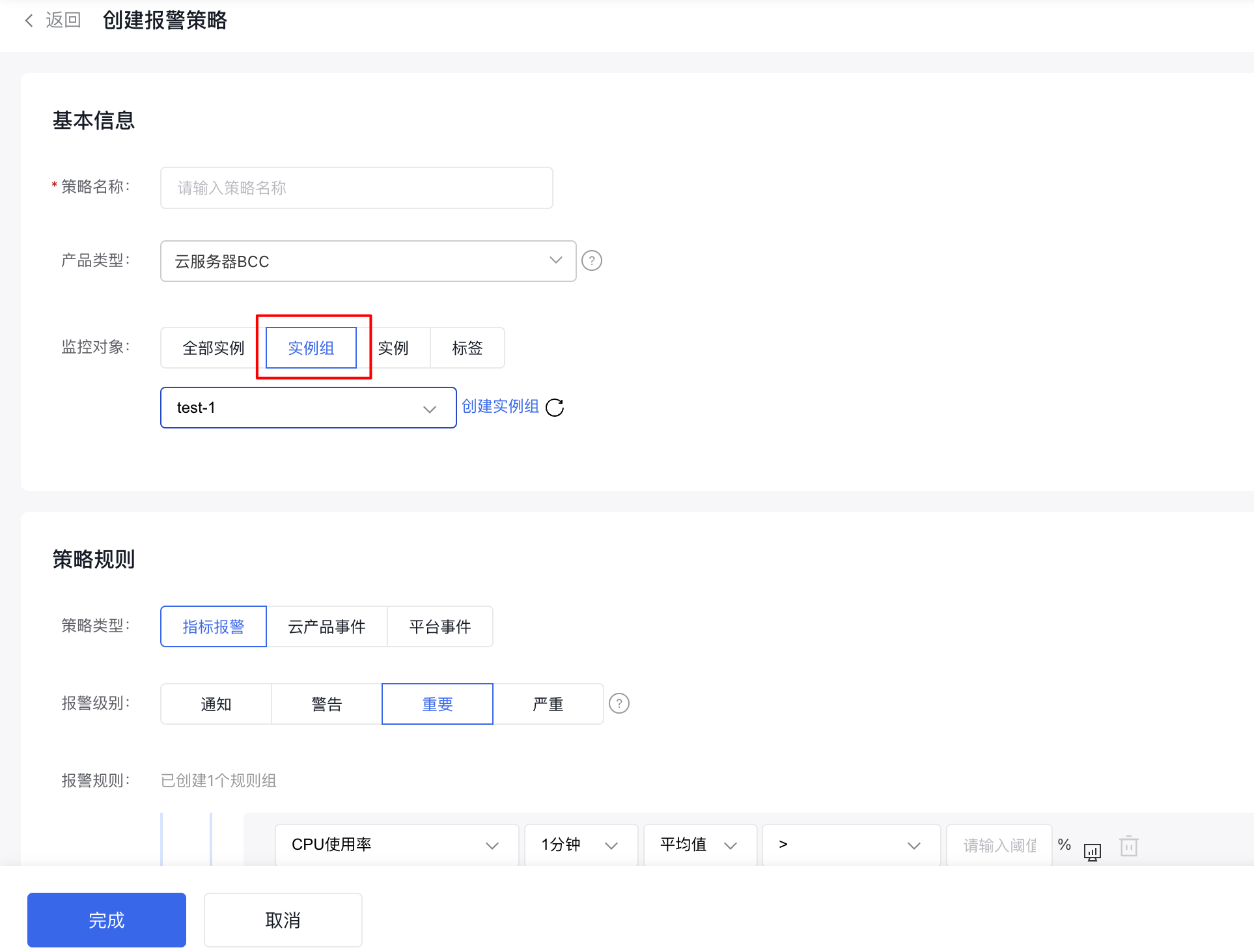
  1. Complete the form and click Save button to complete alarm strategy creation.
    In the monitor object on this page, select the instance group for which an alarm strategy is to be created.
​

Note: The alarm strategy affects all instances linked to this instance group. An alarm notification will be sent when any instance triggers the alarm conditions.

Edit/delete instance group alarm strategy

  1. Go to the Instance Group List page, and click on the name of any instance group to view its details.
  2. On the Instance Group Details page, click the "Alarm Strategy" tab to view the Alarm Strategy List for that specific instance group.
  3. Click Edit or Delete button in the Operation column to edit or delete an alarm strategy.
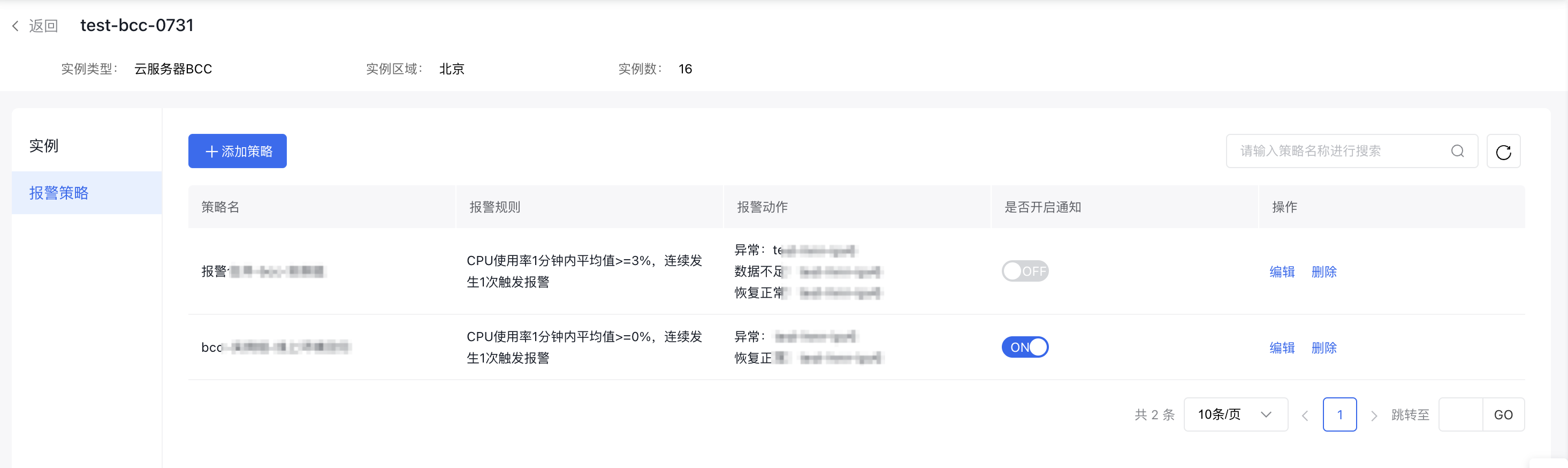
    image.png
    You can also manage strategies for different instance groups in batch in the alarm management module. For details, refer to Manage Alarms

Previous
Instance monitor
Next
View Metrics